
Faces (2025)
Seeking Shade in the Desert (2025)
Muted Pink Desert
(2025)
from ab to zu
(2025)
You do not need to worry about what we said (2024–2025)
A Piece of History (2024)
Flee Ye Into Another (2024)
At The Time When (2024)
Between Faces, Stories and Power (2023)
flo-o-o (2023)
The State of Being Vanished (2021)
dok dat dap dap (2021)
I am not a robot (2020–2021)
The Rise of Modern China (2018)
Affirmative Resonance (2018)
‘Parts’ of China (2017)
Transliterations (2017)
Ximplification of a Language (2016)
A Living Space: Houses (2014–15)
Breathe (2012)
Circle (2011)
↓

Flee Ye Into Another
2024, Installation
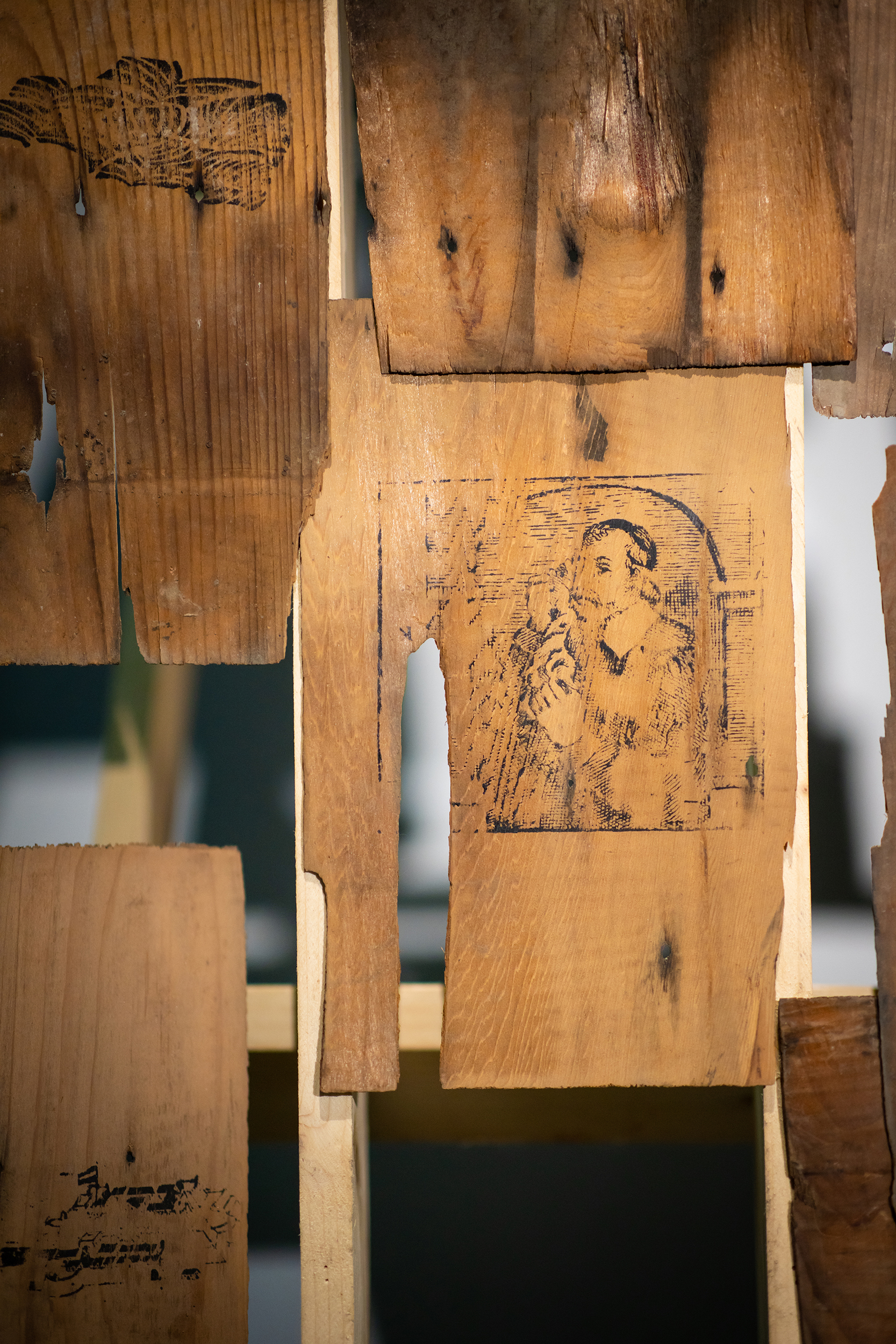
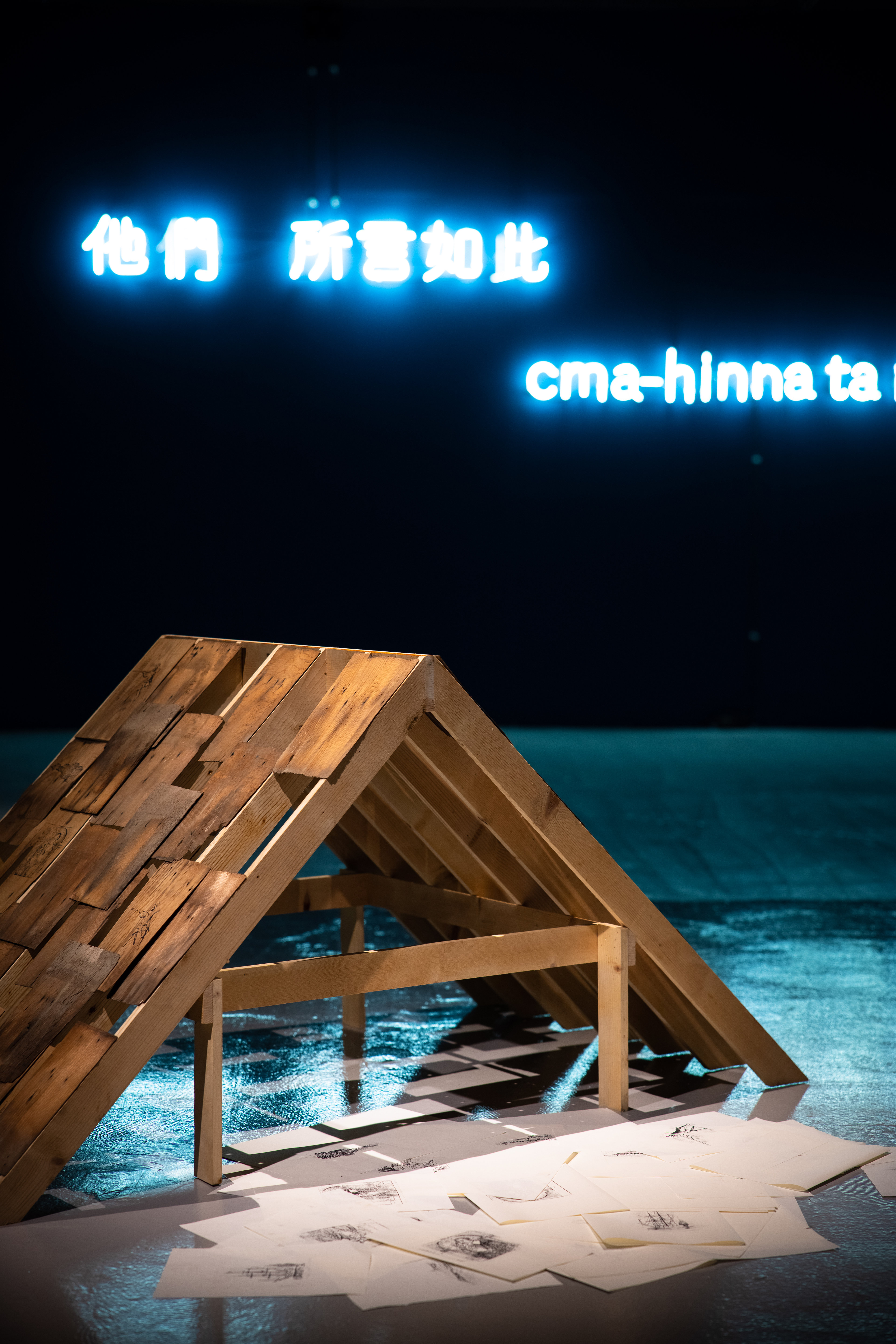
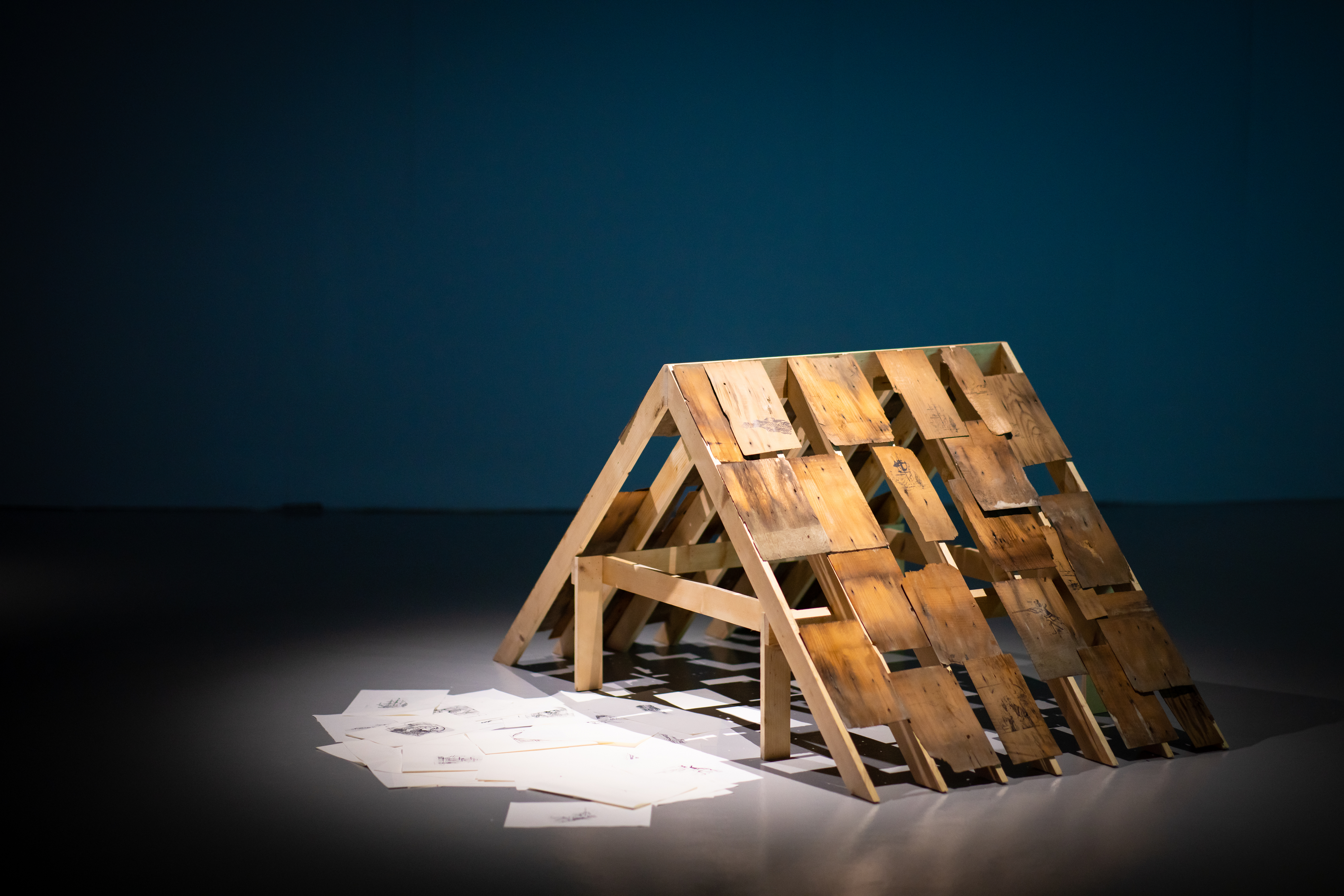
These architectural fragments have been retrieved from old houses across Taiwan. The work unpacks silent narratives embedded within materials, revealing histories beyond written documentation.
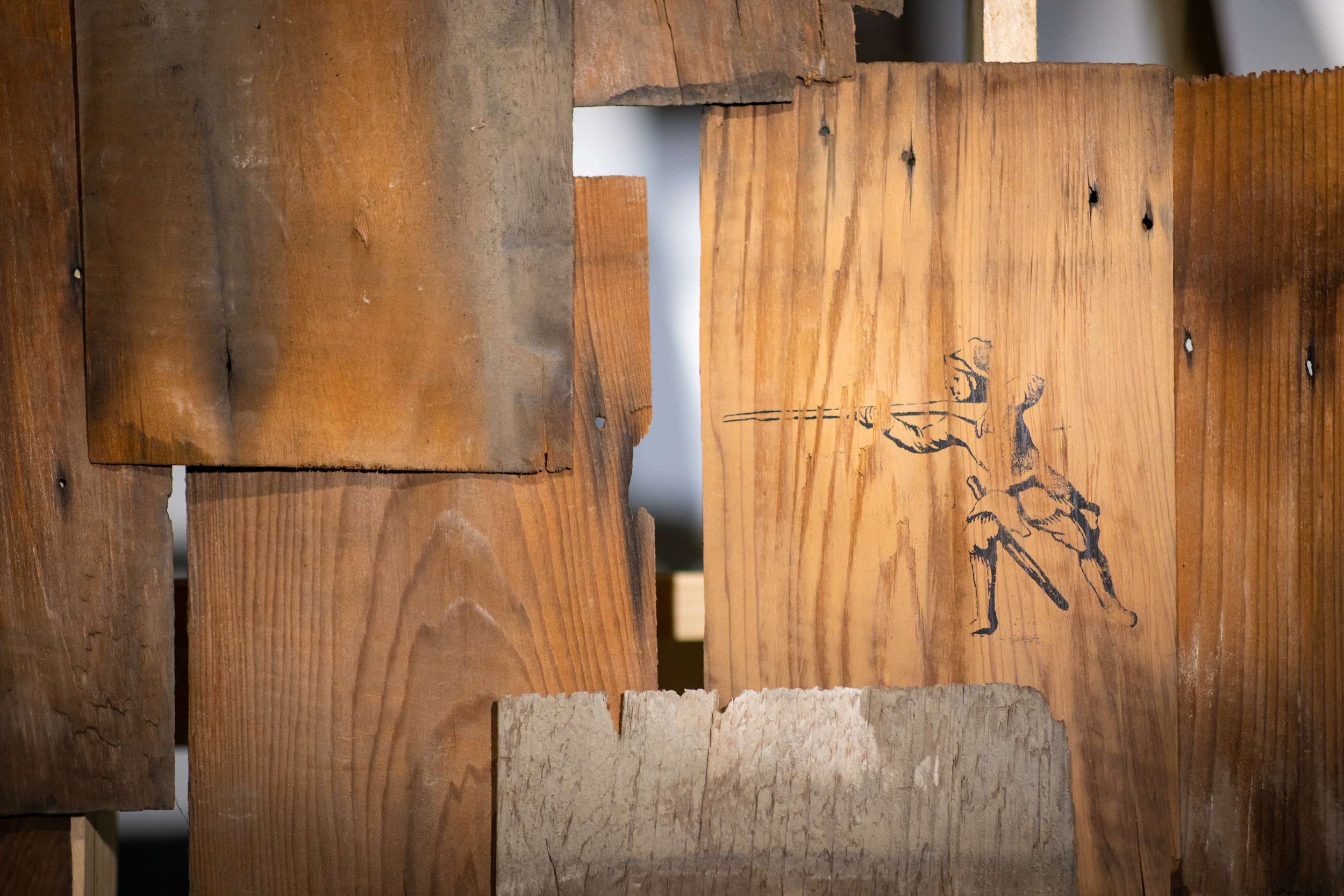
The installation centres on thin wooden plates from aging roofs across Taiwan's historical homes. The wooden plates become both medium and message through my woodcut prints. The prints were made by focusing on and re-tracing small portions of Dutch colonial-era drawings. A sculptural wooden structure, echoing the form of a traditional roof, houses these printed plates.
“Flee ye into another” is Jesus's instruction from Matthew 10:23 telling his disciples to escape to the next town when persecuted.
Sirayan initially had no writing system. During Dutch colonization (1624-1662), missionaries introduced a Latin alphabet writing system for Sirayan, creating the Sinckan Manuscripts. These documents primarily recorded land and financial contracts.
By 1873, scholars were unable to find anyone who could speak Sirayan in southern Taiwan. The Dutch missionaries' translation of the Bible into Sirayan 400 years ago was intended as a means of spreading faith, but unintentionally became a way to preserve this now-extinct language. Today, we can only use these records in Latin letters and Chinese characters to work out the original pronunciation and meaning of this language.
Wooden Sculptures, wooden roof plates from Taiwan's old houses
1300 × 800 × 640 mm
* Thanks Heritage Architectural Materials Vault Tainan for supporting and collecting the architectural materials.
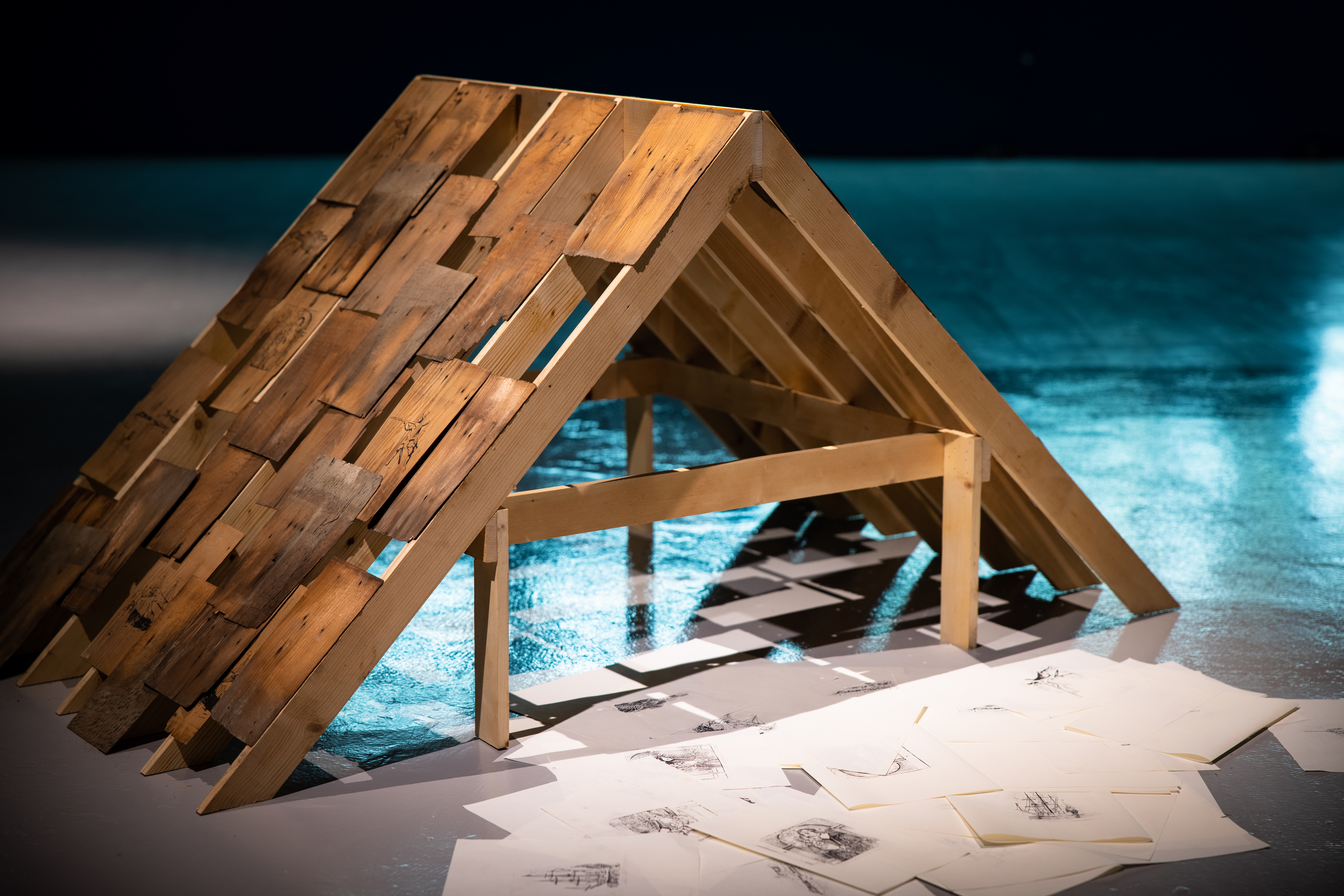
Exhibition views:
You do not need to worry about what we said (10/2024–04/2025),
Soulangh Artist Village, Tainan (TW)
Duo Exhibition of Wai Lun Hsu and Lai Ping So
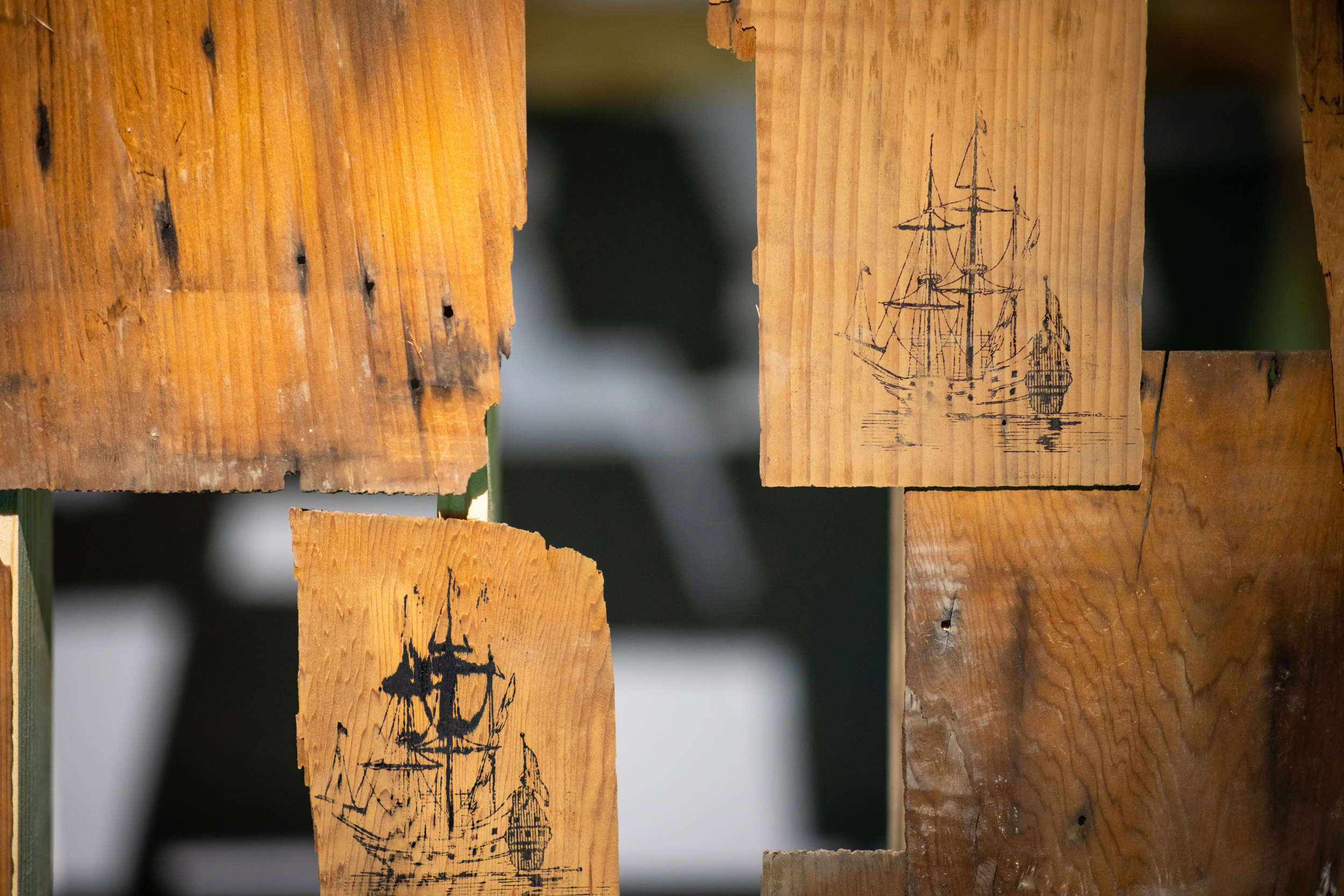

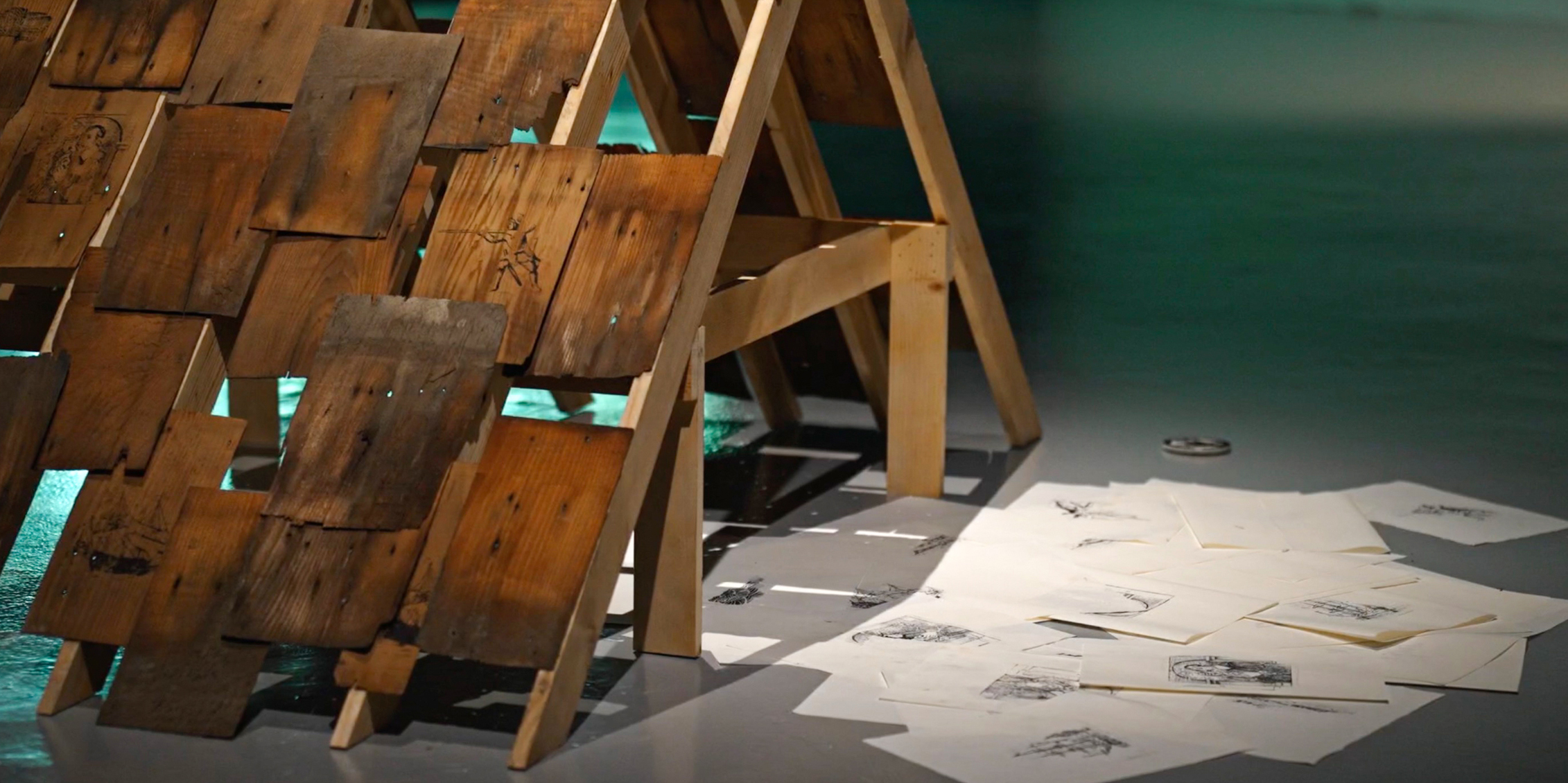
Flee Ye Into Another
2024, Installation, Woodcut Prints
Wooden sculptures, Old roof plates from Taiwan's old houses
1300 × 800 × 640 mm
《就逃到那城去》
2024,裝置,木刻版畫
木雕、台灣老房子的舊屋頂頂木片
1300 × 800 × 640 毫米
這些建築碎片取自台灣各地的老房子。作品探討非文字記載的歷史記錄,透過這些材料,揭示了書面記載以外的歷史軌跡。裝置的核心是來自台灣歷史住宅舊屋頂的薄木板。
作品選取並重新詮釋了荷蘭殖民時期繪製文件中插圖的局部細節,然後經通過木刻版畫在薄木片上印刷。一個雕塑般的木結構呼應傳統屋頂的形態,承載並展示這些舊屋頂木板。
「就逃到那城去」是耶穌在馬太福音10:23中對門徒的指示,告訴他們在遭受迫害時逃往下一個城鎮。
西拉雅語最初沒有書寫系統,直到荷蘭殖民時期(1624-1662),傳教士開始教導西拉雅人使用羅馬字母拼寫母語,形成新港文書。這些文書主要用於記錄土地租借、買賣及金錢借貸等契約。
1873年時,學者已無法在台灣南部找到會說西拉雅語的人。荷蘭傳教士400年前將聖經翻譯成西拉雅語,是傳播信仰的手段,卻無意中成為了保存這個已消失語言的方式。我們現在也只能藉著這些拉丁字母與漢字的記錄,去推測這個語言原來的發音與意義。
2024,裝置,木刻版畫
木雕、台灣老房子的舊屋頂頂木片
1300 × 800 × 640 毫米
這些建築碎片取自台灣各地的老房子。作品探討非文字記載的歷史記錄,透過這些材料,揭示了書面記載以外的歷史軌跡。裝置的核心是來自台灣歷史住宅舊屋頂的薄木板。
作品選取並重新詮釋了荷蘭殖民時期繪製文件中插圖的局部細節,然後經通過木刻版畫在薄木片上印刷。一個雕塑般的木結構呼應傳統屋頂的形態,承載並展示這些舊屋頂木板。
「就逃到那城去」是耶穌在馬太福音10:23中對門徒的指示,告訴他們在遭受迫害時逃往下一個城鎮。
西拉雅語最初沒有書寫系統,直到荷蘭殖民時期(1624-1662),傳教士開始教導西拉雅人使用羅馬字母拼寫母語,形成新港文書。這些文書主要用於記錄土地租借、買賣及金錢借貸等契約。
1873年時,學者已無法在台灣南部找到會說西拉雅語的人。荷蘭傳教士400年前將聖經翻譯成西拉雅語,是傳播信仰的手段,卻無意中成為了保存這個已消失語言的方式。我們現在也只能藉著這些拉丁字母與漢字的記錄,去推測這個語言原來的發音與意義。